Worry and war
Iran and other news of the week

We must have the stubbornness to accept our gladness in the ruthless furnace of this world. To make injustice the only measure of our attention is to praise the Devil.
— “A Brief for the Defense” by Jack Gilbert
*****
In under one week’s time the Iran War that began last Saturday with surgical strikes inside Iran has expanded to encompass strike zones from the edges of Europe to the tip of the Indian subcontinent. More than 50,000 U.S. military personnel are participating in the joint U.S. and Israeli operation, according to one CENTCOM-briefed estimate, while the Pentagon has not publicly released a figure.
For summaries read this week’s posts for paid subscribers here and here.
Iranian Golshan Fathi went to donate blood at 7 a.m. this morning. “Hospitals are open, and every hospital has a number of injured people. Gas stations are working. There's mineral water, it's just gotten more expensive,” she posted on X. “We're under so much pressure from worry and war that my throat choked up.” Read her whole post here.
Americans at home have yet to feel the pinch of a new war in the Middle East, but likely will. Today Qatar’s energy minister said he expects all Gulf energy producers to shut down exports within weeks if the Iran conflict continues and drives oil to $150 a barrel.
Meanwhile, the conflict has left tens of thousands stranded as nearly 25,000 flights were cancelled. And in one potential sign of internal disarray, the State Department is battling accusations from diplomats and travelers who say the Trump administration endangered U.S. citizens in the Middle East by beginning a war against Iran without adequate plans for helping Americans leave the region.
Here’s the latest security alert for Americans in Lebanon, where an estimated 100,000 people have fled Israeli assaults, with more than 120 killed since yesterday.
In Israel travelers faced persistent Iranian missile and drone strikes without a way of escape. It’s the Jewish holiday of Purim this week, Ramadan for Muslims, and the Christian season of Lent. Thousands of holiday tourists and observant groups were blocked from air travel, and Israel’s Ministry of Tourism is rationing slots for shuttle bus service to exit the country via a Red Sea border crossing at Taba to Egypt.
“Targeted killing in the War on Terror was a gateway drug to what we have now,” a former top national security official told The Washington Post’s David Ignatius. Read his latest on the dangerous rise of decapitation warfare.
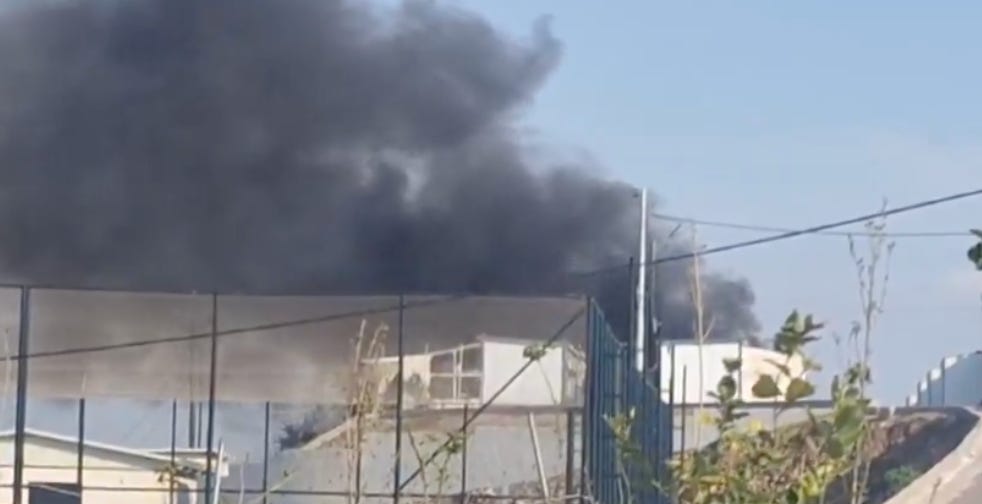
In other news:
Kristi Noem yesterday became the first cabinet secretary to be fired by President Trump in his second term. Her departure from the Department of Homeland Security follows a tumultuous tenure with two high-profile killings of U.S. citizens by federal agents in Minneapolis. The Wall Street Journal has an inside look (plus past investigative pieces) on her wreckless, self-aggrandizing management of the department and events leading to her departure.
In a 66-page ruling, federal district judge John R. Tunheim last week forbid the federal government from arresting and detaining Minnesota refugees who have no grounds for removal and are awaiting green cards. The Justice Department has yet to appeal the ruling, which applies only to Minnesota. It is a striking read, and Christianity Today has key excerpts from the decision, which addresses head-on the Department of Homeland Security’s ill use of the law. In part:
“The Court will not allow federal authorities to use a new and erroneous statutory interpretation to terrorize refugees who immigrated to this country under the promise that they would be welcomed and allowed to live in peace, far from the persecution they fled.”
Along Pakistan’s border with Afghanistan, a week-long “open war” declared by Pakistan continues with heavy shelling and explosions, displacing nearly 66,000 Afghans. Pakistan has hosted thousands of Afghans unable to find safe haven in other countries after the U.S. exit in 2021, but Pakistani airstrikes on alleged militant sites in Afghanistan last month prompted Taliban retaliatory operations. On March 1 blasts and explosions extended to the Afghan capital, Kabul.
China is escalating its use of military drones against Taiwan, reports the U.S.-China Economic and Security Review Commission, with recent airspace violations and a sophisticated transponder-spoofing operation. Analysts describe both as rehearsals for a potential conflict scenario. A Reuters investigation found China conducting 23 single drone flights over the South China Sea in recent months while transmitting false transponder signals that made it appear to be other aircraft.
Former rapper and Kathmandu mayor Balendra Shah, 35, is leading in key vote-counting areas of Nepal after the country’s first general elections since deadly Gen Z protests last year.
Nigeria is the deadliest place in the world to be a Christian, begins a new report by the House Appropriations and Foreign Affairs committees at the request of the White House. It calls for a bilaterial agreement between the U.S. and Nigeria to monitor and protect vulnerable communities coming under attack and to demobilize and remove Fulani herdsmen militias overtaking Christian holdings. In one attack last month, militants took 160 Christians hostage and force-marched them 20 miles.
In Democratic Republic of Congo, more than 200 people were killed on Tuesday in a mine collapse at the Rubaya mining sites in North Kivu, an area under control of Rwanda-backed M23 rebels. The coltan shaft collapsed in heavy rain, and the death toll includes 70 children, presumably mine workers.
Mexico along Jalisco’s tequila trail, the Los Angeles Times has an inside look at the cartel terror that engulfed the area following a Mexican military operation that killed cartel boss Nemesio “El Mencho” Oseguera Cervantes, last month.
Chile became the first country in the Americas to eliminate leprosy, or Hansen disease. Chile is only the second country in the world, behind Jordan, to have reached the milestone, according to the World Health Organization. The United States has about 225 new cases a year, a number that’s been rising in recent years.
Last year for the United States, something not seen since the Great Depression: More people moved out than moved in. U.S. net negative migration in 2025 led to an estimated loss of some 150,000 people, and with immigration crackdowns the outflow will likely increase in 2026, according to calculations by the Brookings Institution.
At the same time, the U.S. saw a 6 percent drop in foreign visitors, or 11 million fewer tourists, representing $12.5 billion in lost economic activity.
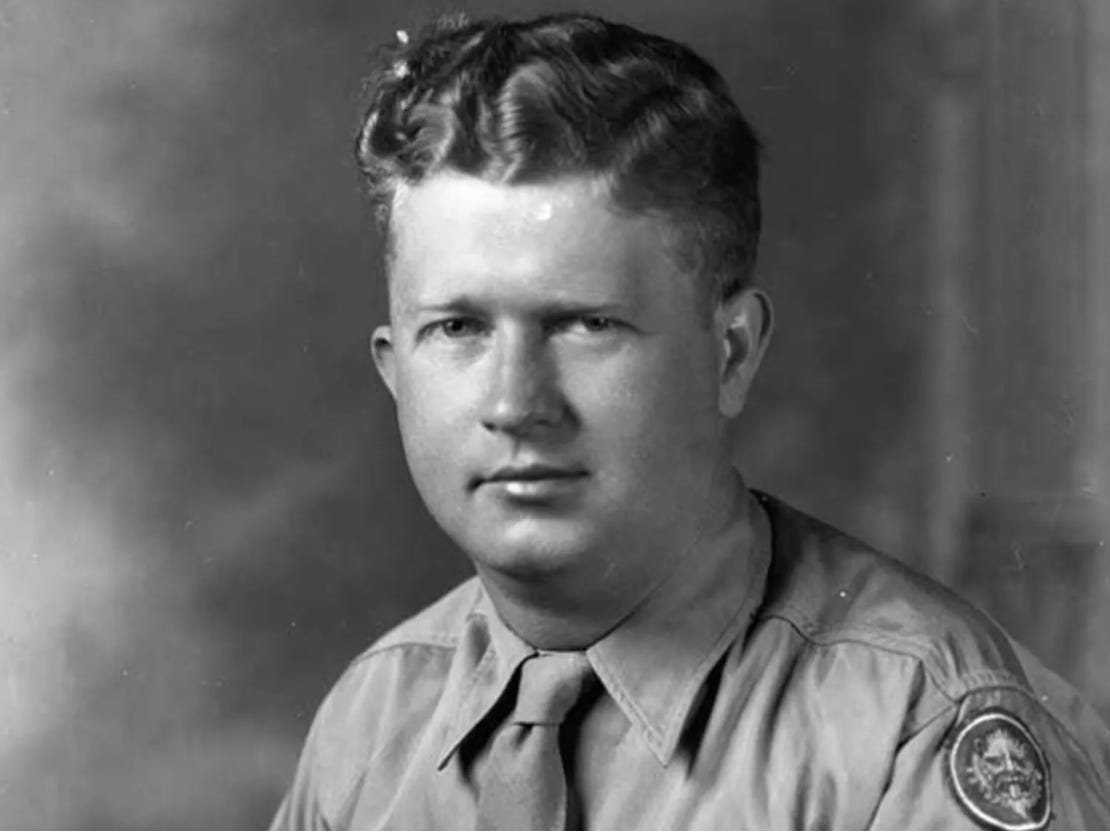
Master Sgt. Roddie Edmonds received his posthumous Congressional Medal of Honor on Monday for “acts of gallantry and intrepidity above and beyond the call of duty” as a prisoner of war in World War II Germany. A Methodist high school graduate from eastern Tennessee, Edmonds was among 20,000 Americans captured in the Battle of the Bulge. When Nazi commanders sought to separate out from his unit Jewish POWs, Edmonds ordered his unit to stand together, famously telling the incredulous SS officer, “We are all Jews here.” Edmonds also served in the Korean war, and died in 1985 without telling anyone, even his family, what had happened in the Stelag.
Homefront: I’ll be traveling over the coming week, first to Florida for spring training baseball and then to Washington, D.C., to meet with the Center for Christianity in Public Life’s 2026 class of fellows, an inspiring program I’m glad to be part of for such a time as this.
One of the strange things about living through history is how quickly extraordinary events become background noise. A war expands, markets adjust, flights are canceled, oil spikes - and within days it becomes just another headline in the scroll.
But behind every geopolitical shift are ordinary lives suddenly pulled into uncertainty: people lining up to donate blood, travelers stranded between borders, families watching prices rise before they even understand why. Conflict always looks strategic on a map and deeply human on the ground.
What pieces like this remind us is that distance can create the illusion of stability. Yet in a connected world, wars rarely stay regional for long - they move through energy markets, supply chains, migration, and politics until eventually everyone feels the ripple.
Mr Edmond's behavior is highly Nickajack coded.
Respect, from a fellow resident of The Nickajack. ❤️