Iran War, Day 1

On February 19 President Donald Trump warned Iran to reach a “meaningful” deal with the United States within ten to 15 days or expect “really bad things.” They didn’t. And on Day 9 the United States and Israel in a joint operation launched a daylight air assault that began around 9:45 a.m. in Tehran on Saturday morning.
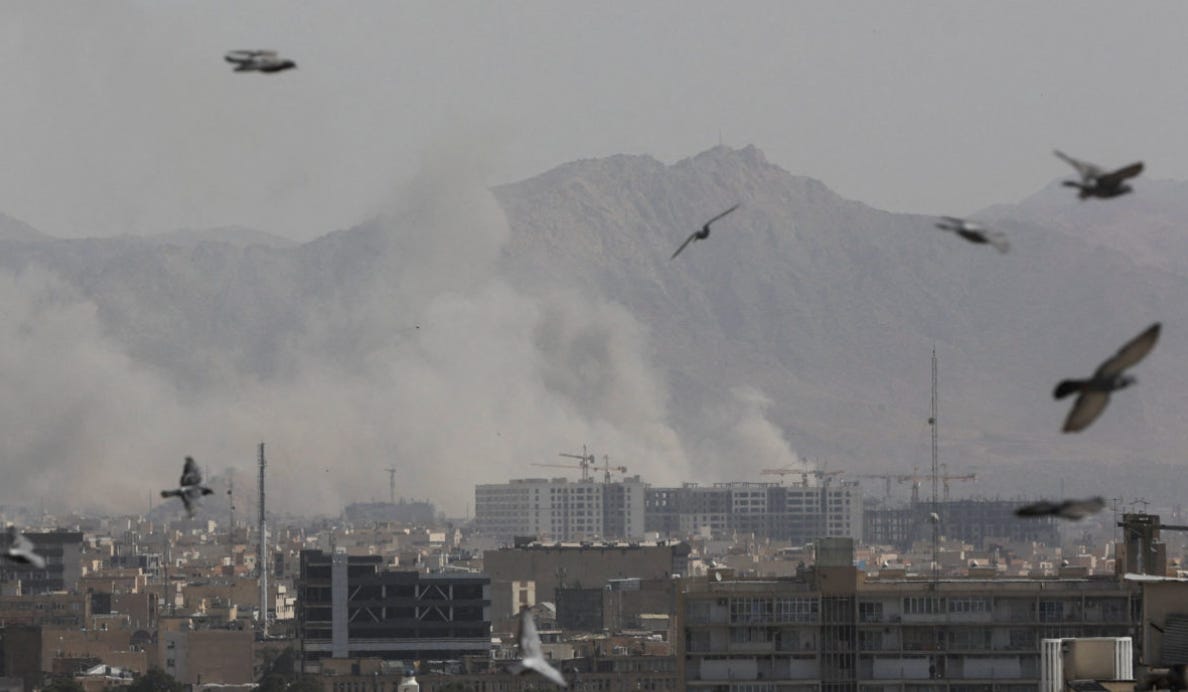
The attacks—what analysts say for the U.S. is the largest concentration of U.S. air power since World War II—coincided with a meeting of Iran’s senior political and military leaders and a window where intelligence officers knew where to find Supreme Leader Ali Khamenei.
Israeli forces targeted Iran’s leaders while U.S. forces focused on key military targets and supply lines, with bombing extending beyond the capital to include sites in central and western Iran: 24 of 31 provinces were hit by U.S. and Israeli airstrikes, according to the Iranian Red Crescent. An Iranian diplomat said hundreds of civilians were killed and wounded in the strikes, with at least 115 reported killed at a girls’ school.
State media confirmed hours later that Ayatollah Khamenei was dead. Other top officials are also believed killed, including Gen. Mohammad Pakpour, commander of the Islamic Revolutionary Guard Corps (IRGC). Iran state television said President Masoud Pezeshkian, the country’s political leader and head of government, survived. Iran formed a council to govern until a new supreme leader is chosen.
Khamenei, who was 86, ruled the Islamic republic for decades longer than its founder Ayatollah Ruhollah Khomeini. He institutionalized its ideological aims, creating a ruthless prison system, instilling rivalry with the West that included a defiant nuclear program, and creating the formidable IRGC as chief enforcer. Read Iran expert Karim Sadjadpour’s obituary here.
Keep reading with a 7-day free trial
Subscribe to GlobeTrot to keep reading this post and get 7 days of free access to the full post archives.