The next chapter
For global Christianity, it may be written in the Middle East

New findings show evidence of an “ongoing conversion phenomenon” in the Middle East and North Africa at a historic level not seen since the first century. Writing in the latest issue of the International Journal of Frontier Mission, researchers out of Amsterdam’s Free University tallied an estimated 270,000 new converts to Christianity over the last 10 years.
The conversions come amidst war and forced migration, comprised almost entirely of former Muslims, “marginalized groups in a context of war and precarity who move in directions opposite prevailing forces of culture and politics.” Authors Scott Gustafson and Grant Porter documented the trend across 15 countries (including war-torn Syria, Iraq, Lebanon, Israel/Palestine, Libya, and Yemen) where respondents identified “care for refugees, loving faith communities, and supernatural occurrences” prompting lasting encounters with Christian faith.
Religion scholars for decades have cited the Global South as the leading indicator on church growth, but Gustafson and Porter suggest that the next chapter of global Christianity is being written in the Middle East and North Africa. The latest figures stand in contrast to declines in Iraq and Syria since the start of the Iraq War. The number of Christians in Iraq have decreased roughly 92 percent and in Syria 74 percent since 2003 as many with roots in ancient churches were forced from their homes by terrorism and insurgency. Today—
It is now very common in evangelical churches to witness Syrians, Iraqis, Egyptians, Lebanese, Jordanians, Christian and Muslim background worshipping together and working side by side.
I saw multiple examples of the trend in my travels in the region last November. My driver one day was Mohammed Rajid Jafo, a Syrian Kurd living now in Iraqi Kurdistan. The New York Times carried story of flight in 2012. Later in Damascus he had a dream about a man he said he somehow knew was Jesus. That led to reading the Bible and finding Christians in Iraq once he migrated there. He and his wife now are part of two young churches in Iraq led by Muslim converts, one Arabic speaking and one Kurdish.
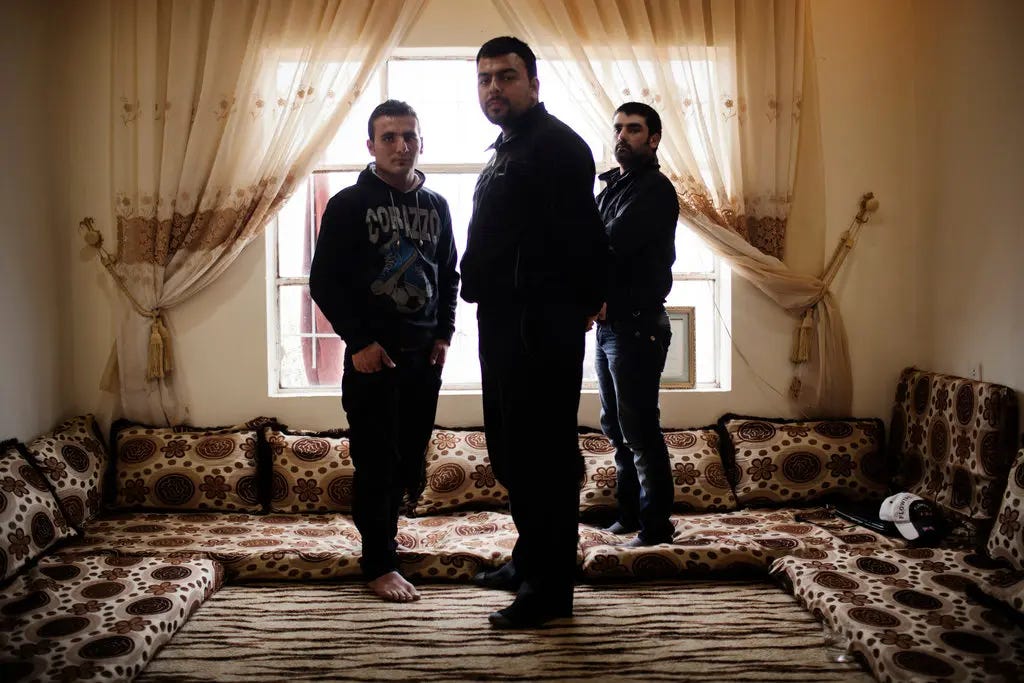
Refugees from war-torn countries, once welcomed, provided airfare, and granted legal status by the U.S. government, are among those detained by immigration enforcement officers in Minneapolis this week.
Without prior notification, ICE agents showed up at homes of refugees who were brought to the United States under the State Department’s resettlement program, taking them into custody and relocating some out of state.
In some cases, the agents “are going to people’s homes, surrounding their homes, drawing their guns and asking people to come out of the house,” said Jane Graupman, executive director of the International Institute of Minnesota. Families and neighbors describe the roundups as “terrifying,” and they often lead to family separations. By definition, refugees already faced similar trauma before resettlement in the U.S.
To receive refugee status in the United States, candidates must have fled their home country, crossed an international border, and demonstrated a “well-founded fear” of persecution based on race, religion, nationality, political opinion, or membership in a particular social group. They are the most heavily screened category of U.S. arrivals, with multiple layers of vetting carried out over years, usually, by Homeland Security and FBI officers involving interviews, biometric checks, and documentation.
Based on multiple sources, those rounded up in Minneapolis include Somalis, Afghans, Sudanese, and others from the Middle East, Latin America, Europe, and Burma/Myanmar.
“We have no reason to think that any nationality is exempt,” said Matthew Soerens, vice president for advocacy with World Relief. Soerens said of “dozens” of refugee detentions in Minneapolis, all had filed for green cards to make permanent their residency status. The Trump administration last year suspended processing green card applications. It seems likely, though, that those applications are being used by ICE to locate refugees in Minneapolis.
Resettlement organizations protested the roundups, with Church World Service today calling for Congress to halt funding to Homeland Security. World Relief CEO Myal Greene called the move against refugees “a five-alarm fire,” saying, “ICE must be held accountable, and this operation must cease.”
Others are calling the federal confrontation with Minneapolis—which led to the shooting death of Renee Good by an ICE officer and another ICE shooting of a Venezuelan on Wednesday—a dramatic turning point. The Trump administration has turned questionable threats into violent encounters, threatening U.S. cities with military action as it also threatens longstanding U.S. allies with invasion.
With immigration enforcement ICE is being transformed into a national police force, says veteran journalist Anne Applebaum, who covered the rise of authoritarian regimes across the former Soviet Union.
This kind of paramilitary force could have other uses in the future. For example, it could be used to intimidate people and prevent them from voting.
Local policing long has been a hallmark of U.S. democracy reform efforts (and billions in U.S. funding) in places like Iraq, Afghanistan, and former Soviet republics. Local forces have a vested interest in their own communities and can build networks of trust. In Minneapolis, where ICE and the Department of Justice have refused to work with local law enforcement, and failed so far to investigate the killing of Good, it’s become quickly evident how national enforcement leads to brutality and the fear of “occupation.”
At the start of another year, Americans can say with Syrians and others caught in political turmoil, “We don’t know what the future will do to us.”

Other news to follow:
Germany joined five other European nations sending troops to Greenland yesterday, as even its far-right leaders, like others in Europe, are distancing their parties from the Trump administration over its threats to NATO partners.
Ukraine declared a state of emergency as Russian barrages knocked out energy supply, leaving in Kyiv and Odessa thousands of homes without electricity and heating in subzero temperatures.
Russia attacked the city of Lviv near the Polish border using its Oreshnik intermediate-range, nuclear-capable ballistic missile, a move perhaps meant to threaten Europe as much as Ukraine.
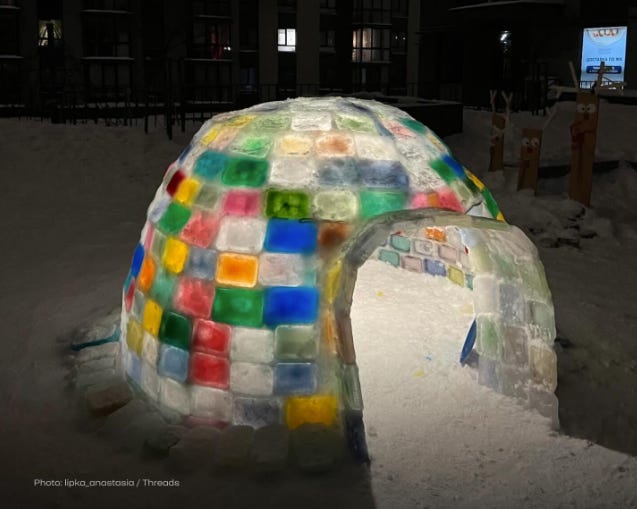
Ukrainians are fighting back with special warming tents and colorful igloos in Lviv built by freezing colored water.
Venezuela’s former President Nicolas Maduro is in jail, but Venezuelans who fled his regime for the United States say it’s not safe to return, even as the United States has moved to end their protected status.
China widened its crackdown on unregistered Christian groups, launching an assault on a church in Wenzhou City on Jan. 4 and detaining preachers and congregants of Early Rain Covenant Church in Sichuan Province on Jan. 6. At least 18 members of Zion Church along with its lead pastor Ezra Jin Mingri arrested last October remain in prison. And in Hong Kong, prominent Catholic businessman Jimmy Lai awaits sentencing after Beijing-led authorities convicted Lai on Dec. 15 under Hong Kong’s recent national security law of “conspiracy to commit collusion with foreign forces” and “conspiracy to publish seditious publications.”
Syria continues to threaten Kurdish-led and U.S.-allied forces in its northeast with artillery and drone attacks, prompting a rare show of U.S. military presence today as American commanders met with the Syrian Democratic Forces. The SDF with U.S. support won key battles to dislodge Islamic State militants and since 2019 fully controlled the region with tacit approval of the Assad regime. A negotiated settlement last year with the new Sharaa government is at stake now, along with autonomy of Kurds and Christians who make up much of the population.
Iran protests and mass killings continue under an internet blackout, but President Trump’s military advisors and allies in the region are warning against attacking as promised.
For 2026, the Council on Foreign Relations has visuals on macro-trends to watch in what’s already the chaos of the new year. And I’m reading Hillary Mandel’s Wolf Hall.
I always trust and appreciate your reporting! Thanks
What do you think of Wolf Hall? It’s been on my reading list.