A narrow place
Counting human losses and Hamas atrocities alongside shipping constraints

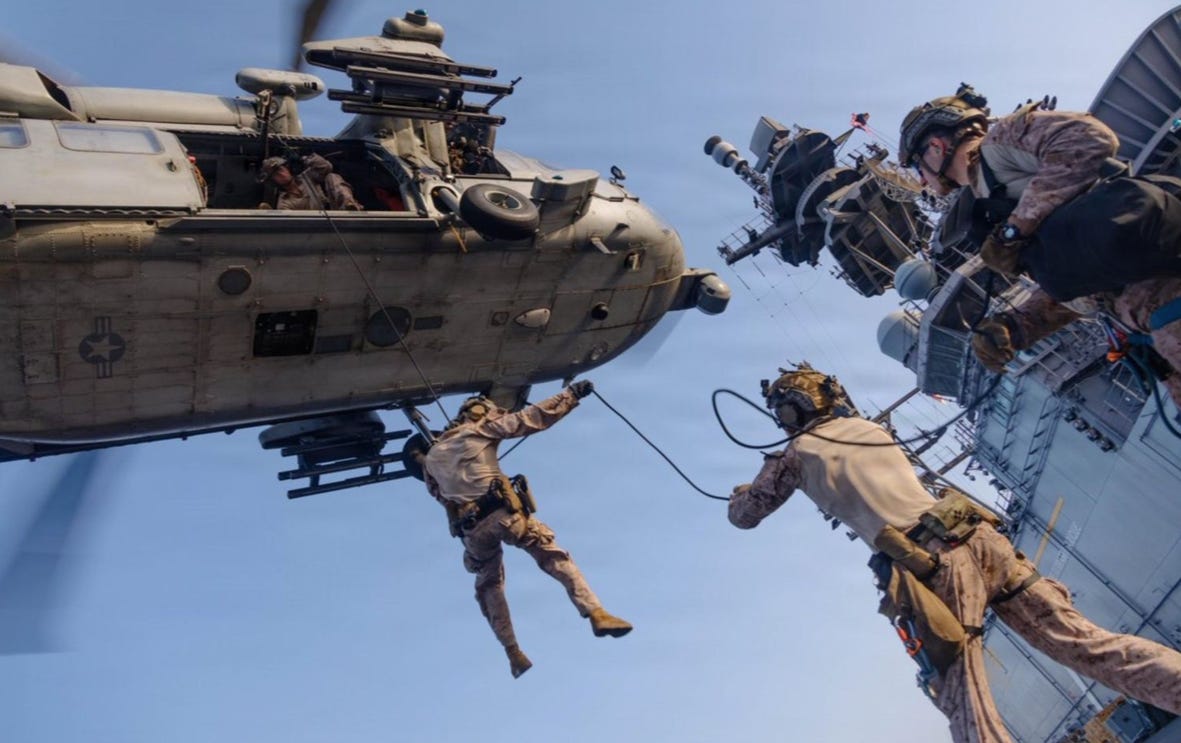
My neighbor Jake is always good for comparing notes on news of the day and for book recommendations. This week we caught up but he had little appetite to talk about the news. Like so many, he feels overwhelmed by the headlines and stays away. “It’s all tsarah, tsarah,” he said, using the Hebrew word for troubles.
Jake was a practicing psychologist and has run several companies, he reads deeply and travels widely, and I’ve always known him to possess abounding curiosity, so I asked him to tell me more. I understand Americans tuning out but civic illiteracy and isolation are so much at the heart of our national troubles, I said. He responded, “We should know about the world, but we don’t have to bear the weight of the world.”
Tsarah, I learned, usually means “distress,” “trouble,” or “affliction,” and in the Old Testament is used to refer to personal or national distress. Its root meaning is a narrow place, a constriction. In the Psalms, King David uses the word to describe being hemmed in by his enemies.
Disconnecting is one way to cope with the hopelessness of feeling trapped. As war and war crimes proliferate, institutions are broken down, and rules of law don’t apply, what appears wide-open chaos (or clearing the decks, depending on your view) in fact leads to narrowing options. You have only to look at your bank account since war with Iran double-boosted inflation to feel the pinch.
I advocate for disciplined and not obsessive news reading. For engagement with the world we touch, first and foremost, rather than taking on the whole weight, something no one can do but God. For me that does include far corners, as even this week notable events unfold in places I’ve covered in decades of reporting.
For others it can and should look different. I was encouraged to learn in a visit to Memphis last week about the work of the MidSouth Immigration Integration Network, a civic organization describing itself as pro-immigrant, pro-employer, and pro-MidSouth. It’s a partnership that spans churches, civic groups and nonprofits, and large-scale employers like FedEx, whose global corporate headquarters is in Memphis. All have differing views and interests but are coming together because they see ways their immigrant community is a needed contribution and not a public nuisance. “We can change systems by working on our values. It’s small scale but important because we are not simply conforming to national narratives imposed on us,” one partner said.
That’s just one way to perhaps dream small and also widen the frame in troubled times.
It’s easy to yell at the headlines and wish somebody would do something. But what if that Somebody is you? Nicholas Enrich learned about that as the head of global health at USAID when it was dismantled in the early days of the Trump administration last year. Enrich wrote a whistleblower memo from inside the humanitarian arm of the U.S. government revealing DOGE’s slash-and-burn disarray last March. He went on to testify before Congress, and to now publish a book about what he saw.
In a Lawfare interview that’s worth a listen, Enrich this week said the effects on the ground have been “catastrophic.” In the past year, “conservative estimates,” he said, show 750,000 people have died, including 500,000 children.
In the immediate aftermath, food distribution stopped in Sudan camps, where the world’s largest displacement crisis is underway. Pregnant women and children died when they walked days to reach clinics that had closed. Enrich also described Trump appointees barring his office from communicating with the WHO and CDC during an Ebola outbreak in Uganda last year.
What I’ve learned as I’m researching a related story for The Dispatch is this from one expert on global health:
Anything that disrupts those systems has downstream consequences. Even if you come back and say you didn’t really stop a program. You’ve actually disrupted it so much that you can’t pick it up. You’ve caused so many people to leave, people to get fired, purchasing to stop procurement, you’ve basically set it back 10 years. You’ve taken away some capabilities that are very hard to rebuild.
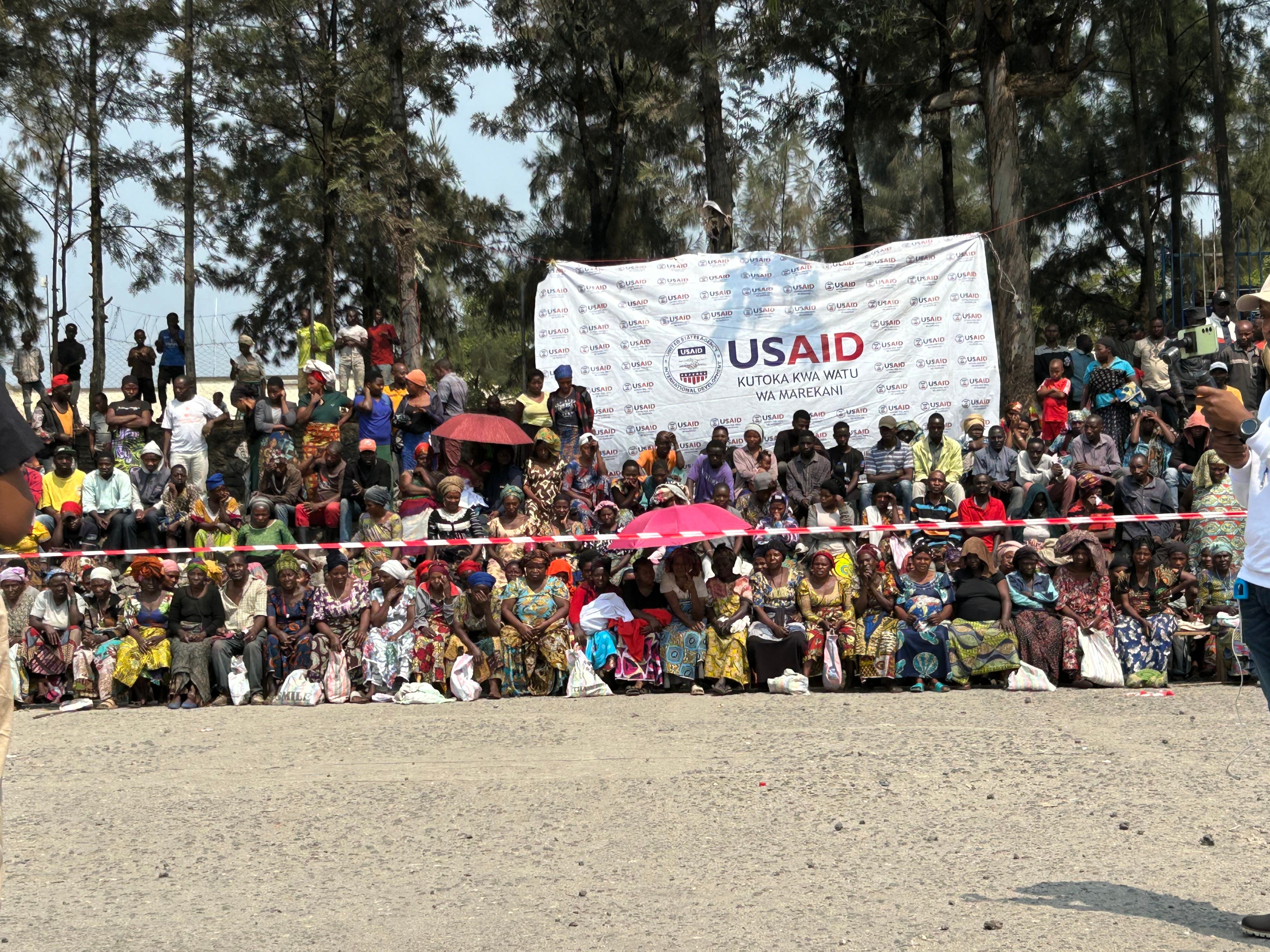
Yesterday the United States announced $1.8 billion in humanitarian aid funding to the UN, after reaching a “humanitarian reset” agreement in December. These are pooled funds that the UN’s Office for the Coordination of Humanitarian Affairs (OCHA) will distribute across 21 in-crisis countries. The State Department says the spending comes after the Trump administration pushed for reforms that prioritize “greater transparency and accountability in a humanitarian sector.” The “new” funding also comes after the U.S. withdrew billions in foreign aid distributed via OCHA last year.
Other news:
President Trump concluded on Friday his three-day visit to China after a nearly three-hour closing meeting with Chinese leader Xi Jinping. The visit ended without formal deals with Beijing, but Trump told Fox News that Xi had agreed to stop sending military equipment to Iran, and the two leaders agreed the Strait of Hormuz needed to be reopened.
Earlier Xi warned Trump that any mishandling of Taiwan could lead to “an extremely dangerous situation,” and that “the Taiwan question is the most important issue in China-U.S. relations.” Trump did not comment on Taiwan, but Treasury Secretary Scott Bessent promised Trump would say more about Taiwan “in coming days.”
Trump told reporters aboard Air Force One today that Xi was giving “very serious consideration” to releasing imprisoned Pastor Ezra Jin Mingri following the summit and calls for his release.
Here’s just one way the stalemated war in Iran could impact Taiwan and further derail a global economy.


In Lebanon, nearly 600 people have been killed during four weeks of fragile ceasefire with Israel, while more than 1 million people remain displaced.
In Israel, a May 12 report by a civil commission found almost all hostages who were abducted by Hamas on October 7, 2023, and later released had experienced or witnessed sexual violence. Based on more than 400 interviews and an independent investigation, the 300-page study details 13 types of sexual violence during the attack and against hostages, including rape, gang rape, sexual torture and mutilation, executions linked to sexual violence, postmortem sexual abuse, and sexual assaults carried out in the presence of family members, among other acts.
“What we have witnessed is deep hatred to humiliate us and terrorize us as a people, as a nation, as women, as vulnerable people who found themselves in captivity and in a prolonged hell,” Dr. Cochav Elkayam-Levy, an international law expert and founding chair of the Civil Commission, told The Times of Israel.
Russia struck Ukraine with 56 missiles and over 1,500 drones in a record 30-hour attack that targeted mostly residential areas. It was the largest drone assault of the war, killing at least 24 people in Kyiv and leaving massive damage. Russian drones also reportedly targeted a UN aid convoy the same day near Kherson.
In the Democratic Republic of Congo, health officials report 65 deaths from Ebola in the northeastern province of Ituri, and declared this week an outbreak of the deadly virus with hundreds more cases suspected.
As part of its pressure campaign against Cuba, the Trump administration says it will indict former Cuban dictator Raul Castro over the downing of planes flown by the humanitarian group Brothers to the Rescue in a 30-year-old incident. In February 1996 Cuban jet fighters shot two unarmed Cessna twin-engine planes looking to rescue Cubans from water crossings over international airspace between Florida and Cuba, killing four Cuban-American pilots. Two escaped in a third plane. Despite military and civilian tracking of the planes, the Clinton administration went after the Brothers crew, threatening to pull their licenses for crossing into Cuban airspace.
I actually covered the trial in Miami federal court in August 1996, and watched as it unfolded in the courtroom that U.S. civilian aviation and military authorities had opportunities to protect the pilots yet stood down while they were attacked.
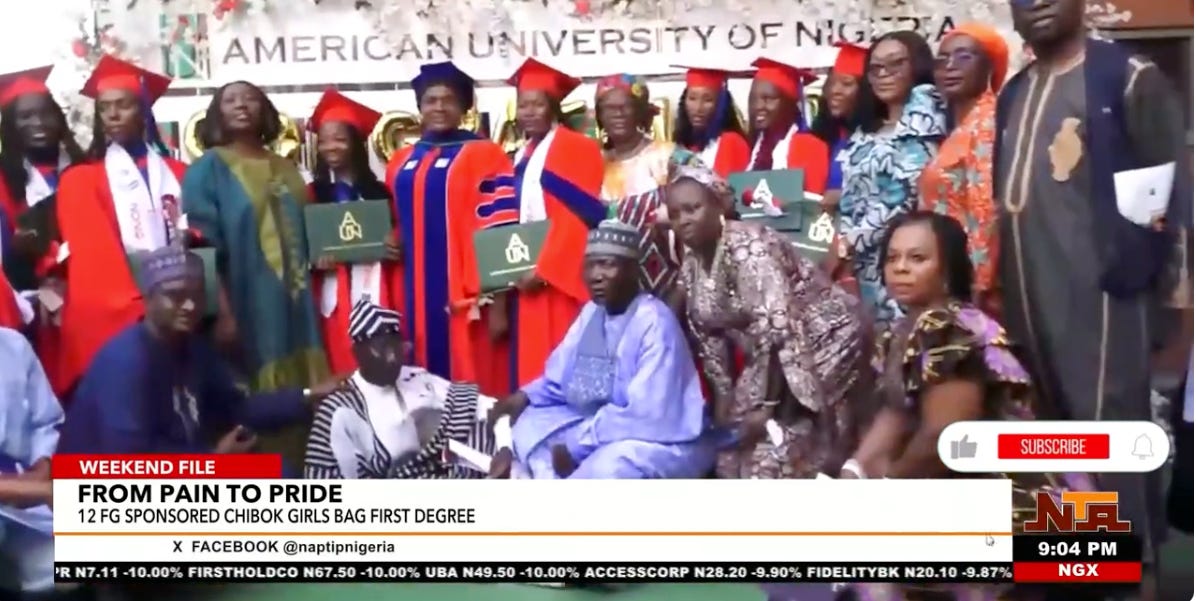
In Nigeria, 12 former Chibok girls captured 14 years ago by Boko Haram militants became the first to graduate with bachelor’s degrees in Nigeria on May 9. In an international incident taken up by the Obama administration, 276 schoolgirls were kidnapped from their boarding school in 2014 and most held for years before escape or rescue. Despite global pressure, 10 years later 82 were still in captivity. Several former schoolgirls have completed university education in the United States.
I’m reading … What Grows in Weary Lands by Tish Harrison Warren.
Thank you for your reporting and also for your advice about the emotional dimension of our responses to the human-caused humanitarian disasters of our time.
Excellent reporting and writing, as always. Thank you.